Industrial air compressors are essential for powering machinery, operating pneumatic tools, and supporting various manufacturing processes. From small workshops to large industrial facilities, choosing the right air compressor can significantly impact productivity, operational costs, and overall performance.
However, selecting an air compressor is not simply about choosing the most powerful machine. Businesses need to consider several important factors, including air demand, operating pressure, energy consumption, and application requirements.
In this guide, we explore how to choose the right industrial air compressor for your business.
1. Understand Your Compressed Air Requirements
Before purchasing an air compressor, determine how much compressed air your business needs.
Consider:
Required air pressure (PSI or Bar).
Airflow capacity (CFM or m³/min).
Number of machines operating simultaneously.
Daily operating hours.
Understanding these requirements helps you select a compressor that delivers consistent performance without unnecessary energy consumption.
2. Choose the Right Type of Air Compressor
Different industrial applications require different types of compressors.
Piston Air Compressors
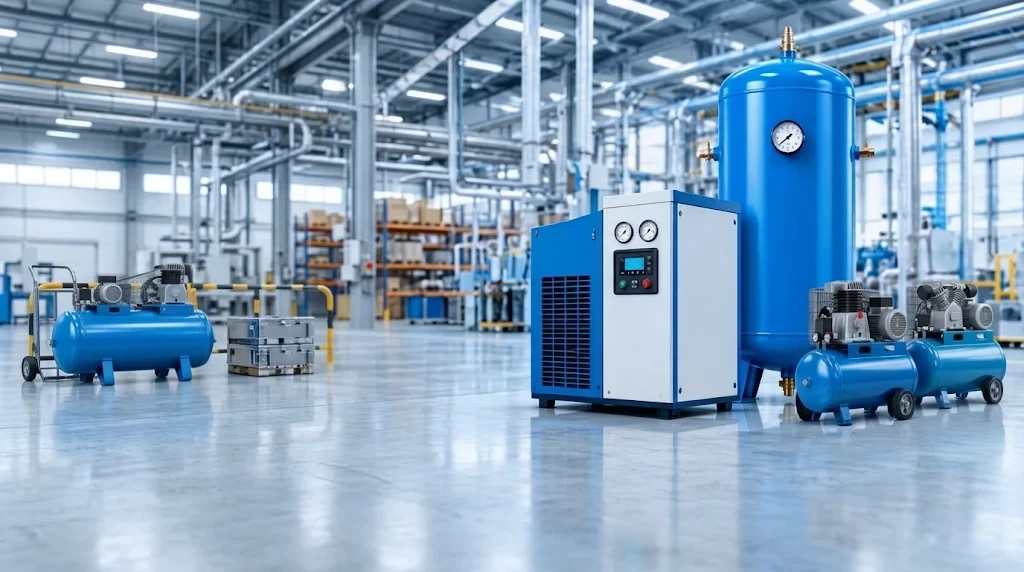
Piston compressors are commonly used in small workshops, garages, and applications where compressed air demand is intermittent.
Screw Air Compressors
Rotary screw compressors are suitable for continuous industrial operations. They provide consistent airflow and are widely used in manufacturing facilities and production environments.
Choosing the right compressor type depends on your operational requirements and expected workload.
3. Consider Energy Efficiency
Energy consumption is one of the major operating costs of an industrial air compressor.
An energy-efficient compressor can help businesses:
Reduce electricity expenses.
Improve overall operational efficiency.
Minimize unnecessary energy waste.
Support long-term cost savings.
Always compare compressor performance and energy requirements before making a purchase.
4. Don't Ignore Air Treatment Equipment
A compressor alone cannot guarantee clean and dry compressed air.
A complete compressed air system may require:
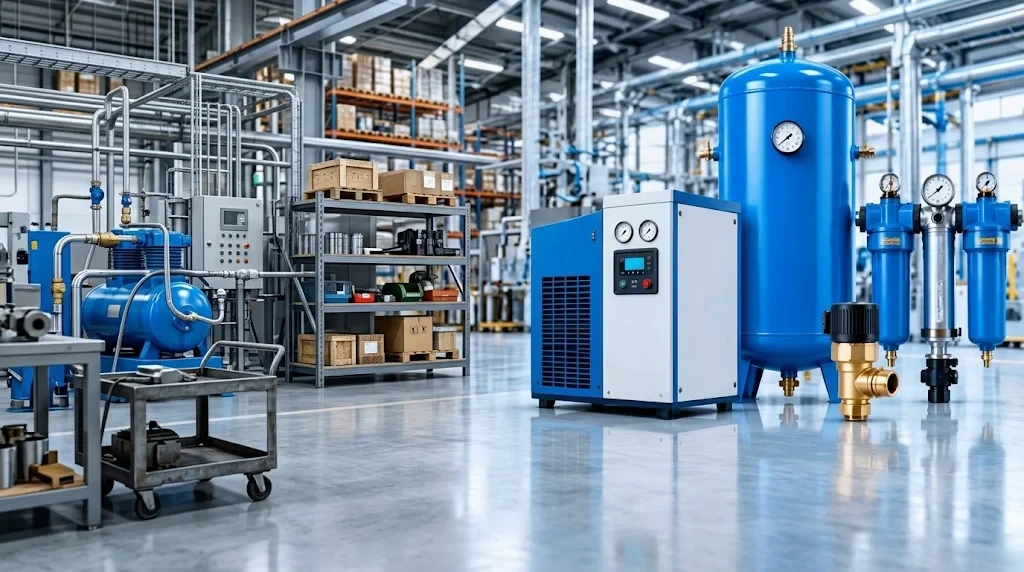
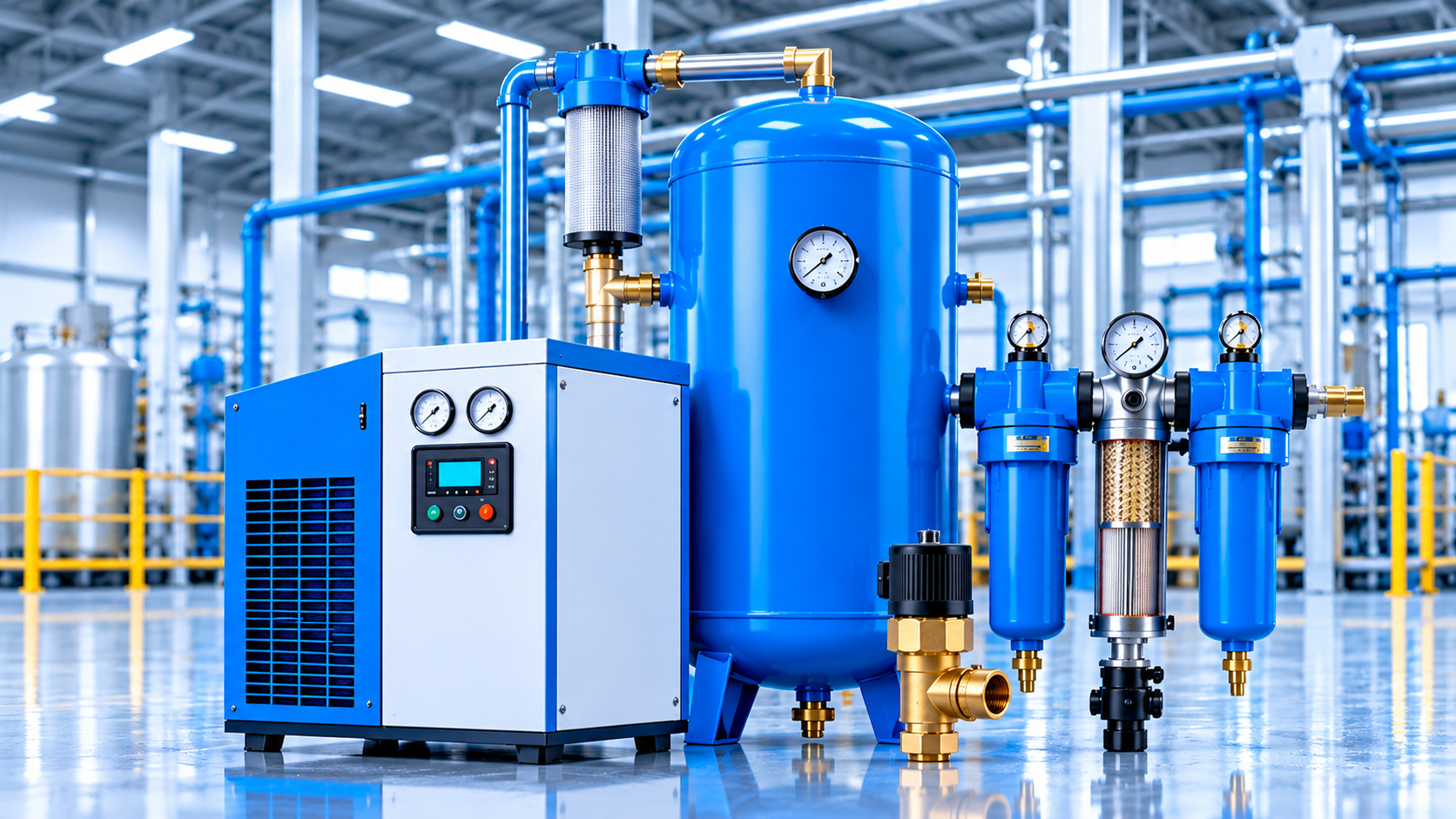
Air Dryer: Removes moisture from compressed air.
Air Line Filter: Removes dust, oil, and other contaminants.
Receiver Tank: Stores compressed air and helps stabilize system pressure.
Draining Valves: Remove accumulated condensate from the system.
Properly selected air treatment equipment helps protect machinery and maintain compressed air quality.
5. Focus on Regular Maintenance
Regular maintenance is essential for maintaining compressor performance and extending equipment lifespan.
Important maintenance practices include:
Inspecting air filters regularly.
Checking oil levels where applicable.
Monitoring operating pressure.
Checking for air leaks.
Draining accumulated moisture.
Following the manufacturer's maintenance schedule.
Preventive maintenance can help reduce unexpected downtime and repair costs.
6. Choose a Reliable Supplier
Choosing a reliable equipment supplier is just as important as choosing the right compressor.
Consider product quality, technical specifications, availability of spare parts, warranty conditions, and after-sales support.
Working with an experienced supplier helps ensure that your compressed air system meets your business requirements.
Why Choose Alfa Engineering Solutions?
Alfa Engineering Solutions provides industrial compressed air and air treatment solutions designed to support different business and manufacturing requirements.
Our product range includes:
We are committed to helping businesses find suitable compressed air equipment through quality products and dependable technical support.
Conclusion
Choosing the right industrial air compressor is an important decision that directly affects productivity, energy consumption, and operational efficiency.
By understanding your air requirements, selecting suitable equipment, investing in proper air treatment, and maintaining your system regularly, you can build a reliable compressed air solution for your business.
Alfa Engineering Solutions – Your Trusted Partner in Compressed Air Solutions.